
The art of brushwork
Part 1
One famous Spanish painter once said “Some painters transform the sun into a yellow spot, others transform a yellow spot into the sun.” At first when I read this quote I thought it gives the obvious notion that it is the painter’s skill to use paint and brushes and a canvas for example to express something from reality through these instruments. That is the art. To make the artificial look like the real thing. But the real thing has no fixed form and no single way to express it. So this quote gives us something a little more subtle, namely that the artist has to have skill to use his instruments and bring to life that very kind of sun that he has felt and sensed with his whole being for that particular moment. Here lies the difficulty, the magic and the mastery of using paint in such a way that suddenly it looks like a sun that you have never seen before, but you know instantly that it’s a sun and not just a spot of paint. Every good artist that has dared to experiment and explore new ways to express himself has given us, somehow in their own way, those moments when we feel like the brushstrokes are doing a poetic dance on our eyes.
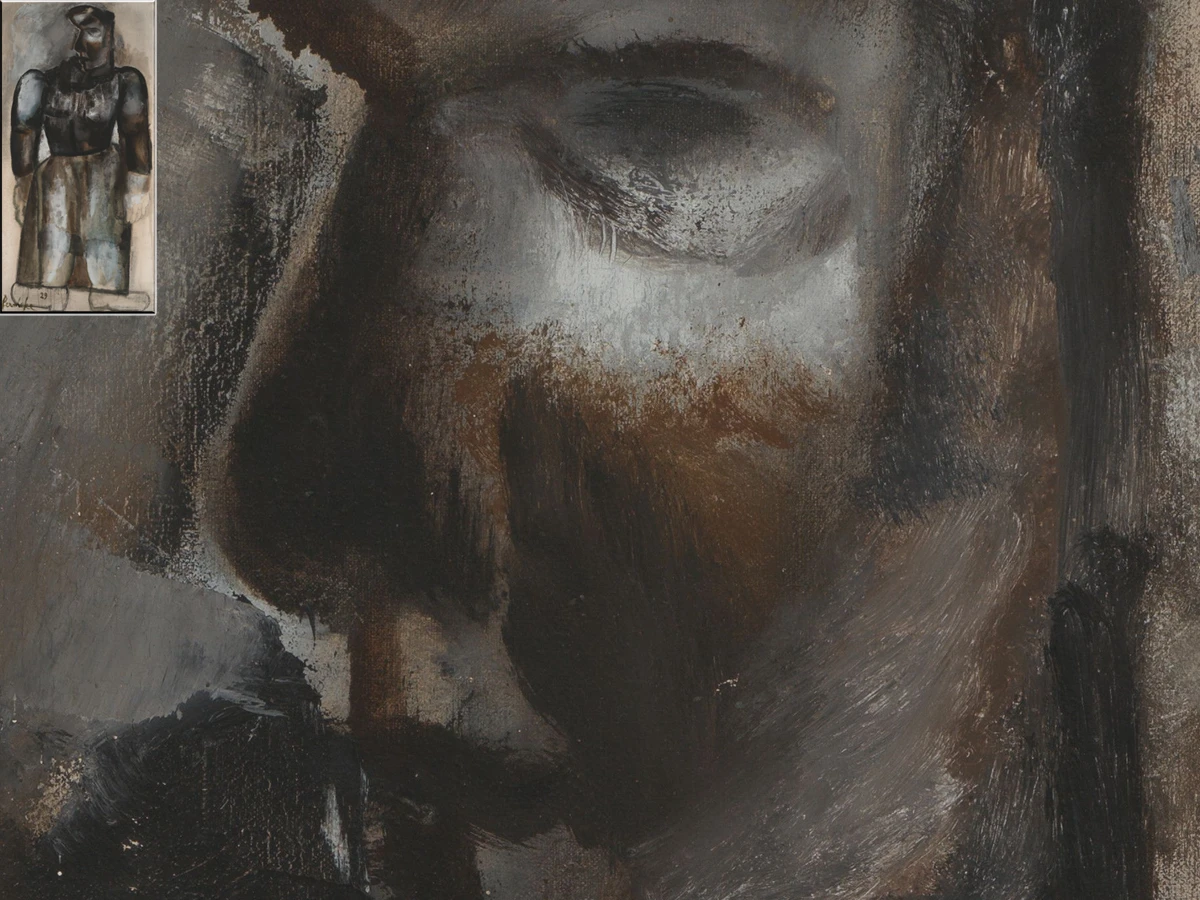
It is not a matter of using a lot of paint thickly applied like the impasto technique or just using wild brush strokes in spontaneous bursts of movement or just dripping paint with a stick. Of course all these techniques can be done very creatively. But you can have very interesting results just as well by using delicately applied thin layers of paint. The point is rather that the art of brushwork lies in how you portray the ideas you have in you by using any of those techniques. In the work below of Belgian expressionist Constant Permeke, we can see an example of thin paint, but nothing in the image feels thin. Instead, it is filled with the gestures and textural dynamics that invite our attention. The face is invoked as if amongst a turbulent sea of emotional brush waves. This type of work shows us that it is in the inventiveness and risk taking of the painter that the power of the medium is awakened.
The famous impressionist Degas also has his own trick of keeping the painting alive and interesting . His case is something worth mentioning because Degas is a master of pastels, where you can smudge forms into blurriness but still with delicate texture and so give subtle nuances that can be contrasted and combined with the more sharp graphic treatments of the pastel strokes. That certain dance between vagueness and clarity, Degas applies into his oil paintings as well. In his work “In a Cafe” shown below, the faces of the two drinkers are woven with the delicate marks of the brush hairs.


On the other hand, the woman’s dress, the bottle and glasses dissolve in looseness and texture and only a few dark outlines are holding their shapes together. This coming and going of different treatments creates the whole delight in what painting can do, reminding us that we are dealing with a kind of a visual illusionist who teases with our notions of what form is.

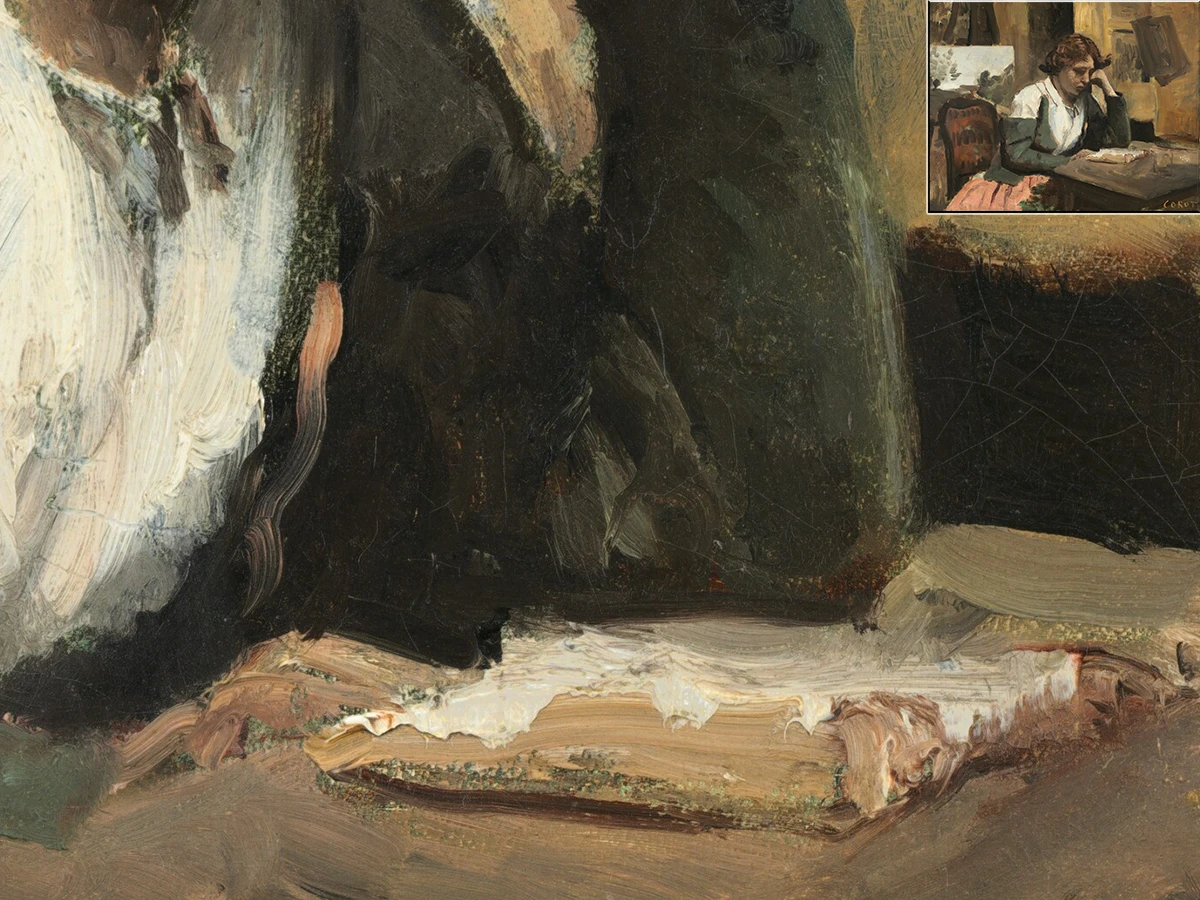
Things can go further in that direction, when there are those painters that allow the paint to live its own life and at the same time still manage to resemble recognisable objects. Just as the Impressionists were gathering their spirits for innovation, another French painter, Camille Corot, became more experimental in the last phase of his career. In his painting below, he is already diving into new grounds, by trusting the thick strokes of paint untamed but still evoking the woman’s dress and the book in front of her. We feel the physicality of smeared paint on a flat surface, the illusion is almost giving its tricks away and for a moment we forget that we are looking at a book. This is just the beginning, because in the periods that will follow, painters will start to flirt more and more with this approach, where the representation of forms is temporarily thrown somewhere in the undefined realm of abstraction and brought back again to our eyes with a new life. Modernism and post-modernism thrived on such ideas.
And if we make a wild jump and fly directly to the 1980s, we can see those thrends ripened with new fruit that barely resemble the initial seeds. Gerhard Richter’s experiments with smearing paint and mixing them directly on the surface is a great example for abstract brushwork. His sense of seeking new ways to use the medium is part of the whole spirit of the so-called Pop artists from the 1960s in the USA and Europe. During those times there was a rich momentum, a powerful wave of creativity that was floating in the areas of painting, printmaking, poetry, video art and others. Painters started mixing the mediums of painting, printmaking and photography so that there was no clear line of distinction. The mechanical process of production had entered the language of expression and new visual styles emerged that reflected the times of technological innovations. In Europe, artists were not far from reacting to what happened in the States and Gerhard Richter was one of them. His early paintings are unapologetically bleak and imitative of the somber photographs he took.

At some point(shown above) he started smearing paint color mixes directly on printed photographs, trusting himself to the art of the controlled accidents. He also went totally abstract by just using different layers of smeared paint, each layer with its unique texture, an imprint of how the smearing reacted to the surface, producing new abrasive shapes and color tones in a spontaneous way. Here he most probably didn’t use actual brushes at all or combined them with using other self-made instruments.
Now lets go back to Austria in the beginning of 20th century. The young maverick of the newly evolving expressionism, Egon Schiele, in just a span of 10 years before his untimely passing, made his unique explorations into painting and left an inspiring echo into our collective mind. His line of drawing gradually became more experimental, as did his use of applying paint, giving chance to the brush marks to show their raw textures when not overdone. But this is not just a random hurried state of affairs to fill an area with minimum paint. In the example below we can see that the brush strokes are doing a dynamic dance to express the model’s body and its gesture. The directions of the strokes are all giving life to the inherent movement and pressures of the posture.
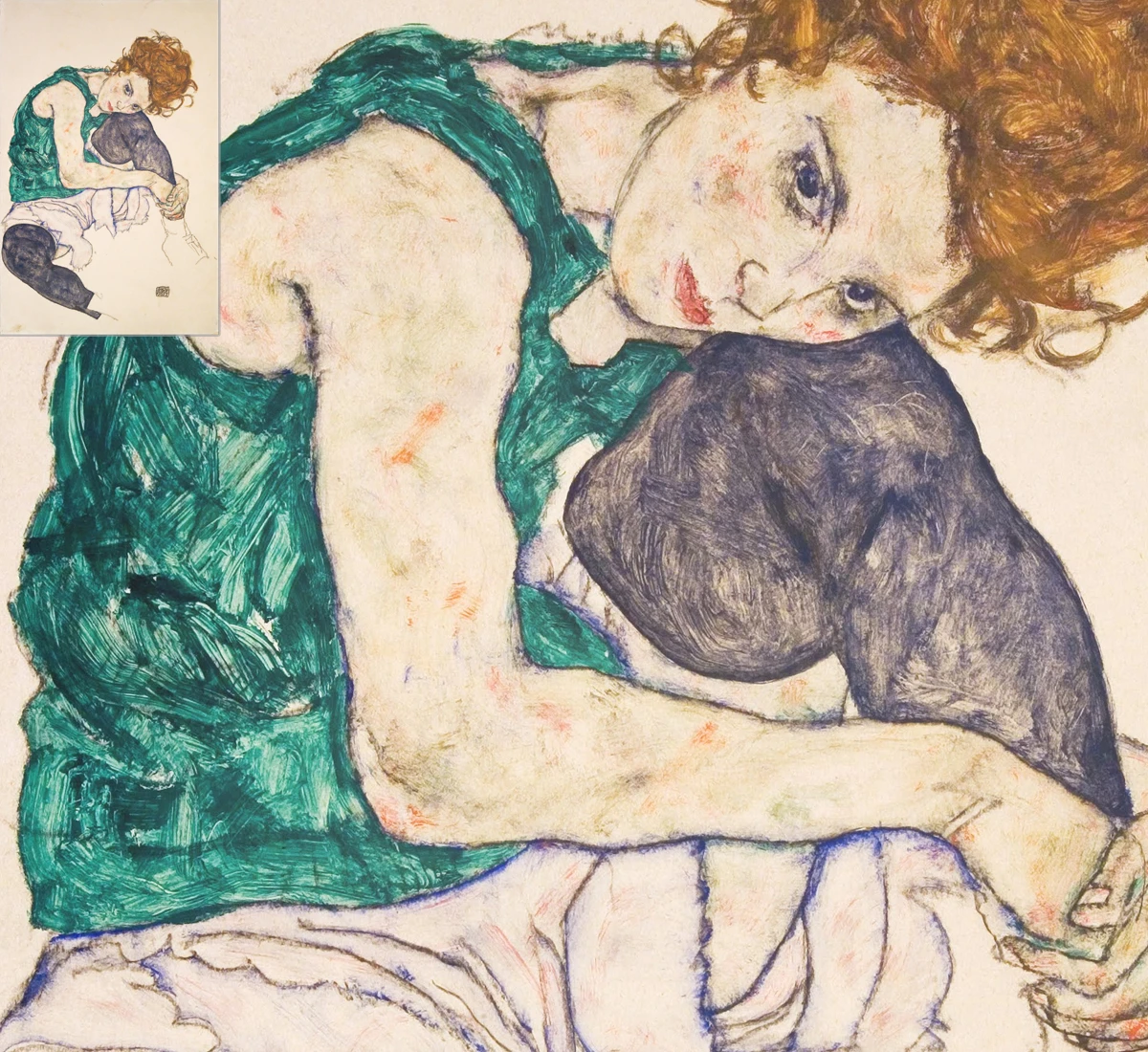
Another great example is this self-portrait below. The structure of the head and all its features are sharply defined by skeletal lines that appear here and there to hold everything together. Added to that, the filling and volumes of the flesh are as if still dancing and moving because of all the fervent directions and clashes of the textural brush strokes. Colours are implied, nothing dominates, just glimpses of saturation, light is suggested but no source is defined, all is created with accordance to this dance of texture.

If we go a couple of years before Schiele’s magic, we find Edouard Vuillard who was initially part of the Nabis group of painters, and his brushwork shows that same free spirit but in another way. The Nabis, as is usually the case of new movements, were found just because of that search for freedom from the academic rigidity of the past. Inspired by Van Gogh and Gauguin, they also pushed the boundaries of color combinations, indulging in their musings of so called disharmonic color relations. After all this was the age of the just born modernism and atonality in music as well. But more of that in another post.
In the painting below, we see this large space of a Parisian cafe inhabited by a homogenous swirl and buzz of people. Figures and interior are painted in such a way that they merge together in one matrix of brush strokes. It’s as if abstract painting is being hinted at, because the features of the bodies and dresses are evoked through very wild and playful marks, we cannot catch hold of any determinate shape given to us in an exact manner like in the case of Schiele. Instead we are invited to just enjoy the suggestion of forms. It’s as if the painter’s view of the scene is not independent from the intoxication of that moment. The background section of the cafe is almost melting by the electric golden light of thе chandeliers. The rigid objectivity turns into the stuff of which dreams are made of.

Let’s look at another work of his shown below. If you look closely you might see that not every possible spot is meticolously covered with paint or opaque and the surface’s colour and texture is given a chance to be part of the image. This type of doing by not doing is seen in the works of other painters around this period, when the anxious hold of the academic rules had been transformed to delight in experimentation and inspiration from Eastern painting as well. Again, forms are losing themselves in the imagination and appear barely solid, on the edge of collapsing into abstraction and pure texture.


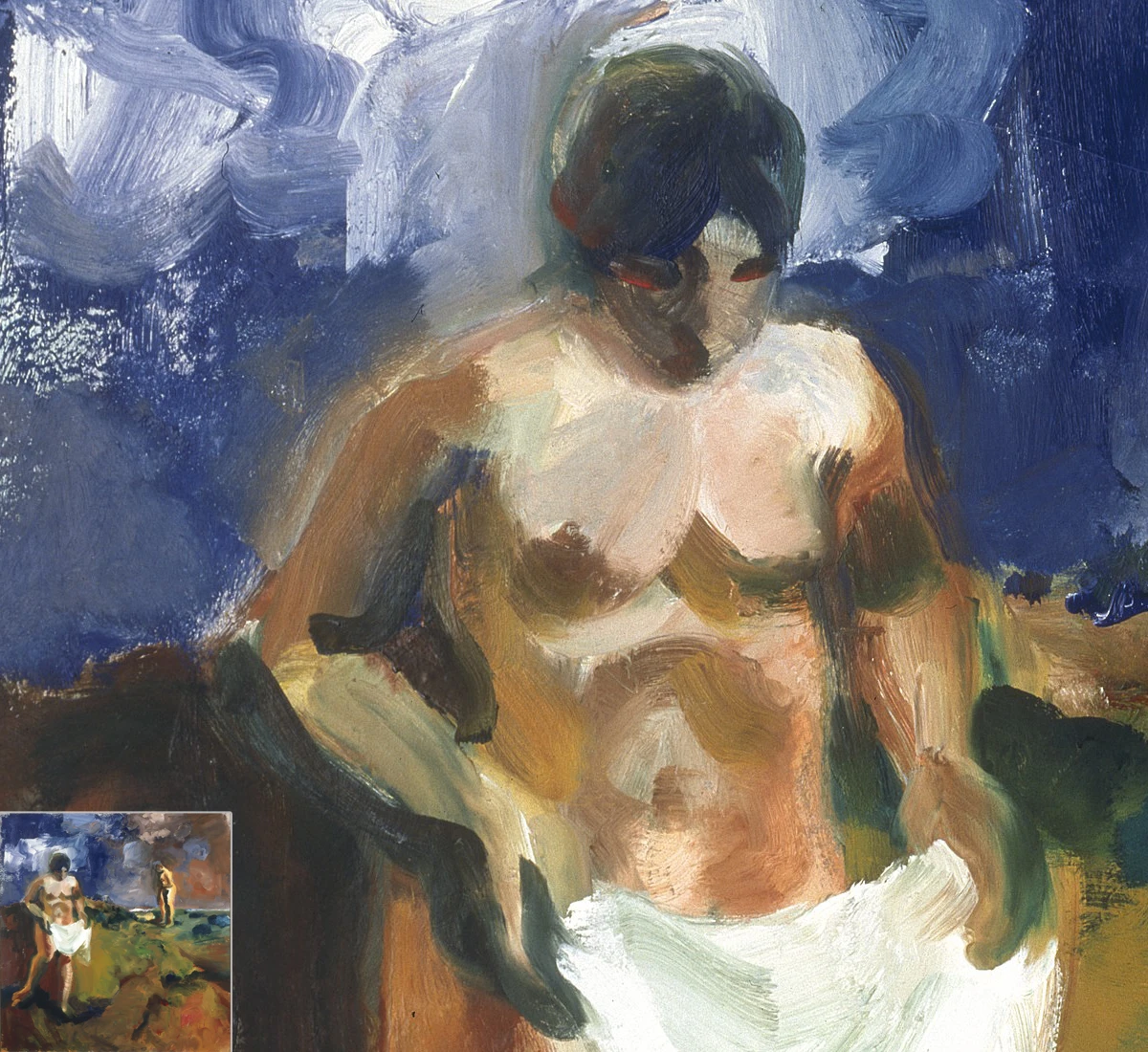
In the middle of the 20th century, in California, a group of painters emerged, who first tried their luck with the then prevailing style of abstract expressionism, only to go back to figuration but carrying with them the playfulness of abstract brushwork. This dynamic created a new type of expressionism, a sort of an American response to the European style that bloomed in the first part of the century. These artists were grouped with the often debated term Bay Area Figurative Movement and one of them was Elmer Bischoff. It is hard to ignore the new vitality and vigour that these artists gave to colour usage, but I’ll leave that for another time. In the example below, Bischoff shows us that we can walk a very thin line between abstraction and figuration – where the illusion almost breaks its spell on us. The figures are suggested with poetic wide strokes of paint, the most basic voluminous shapes that represent the human body and at some places they lose their function altogether and dive in ambiguity. The sky and the ground are welcoming this treatment as well and at spots above the figures’ heads we see gestures that leave clear traces of the brush itself.

Another notable example from the same group is David Park. In the 2 paintings below, Park goes in his own way to a similar direction of simplified raw forms that evoke figures. We feel a burning desire to break free from precision but not abandon the heart of the things portrayed. He almost goes so far as if to seem a bit caricaturish and humorous of his subjects. Bold and decisive gestures define their essential characteristics, sometimes a seemingly simple stroke can provide the necessary ingredients for eyes, lips, teeth and so on. This is where his poetry lies and the risk that he took opens for us another door in the art of brushwork. Yet we must not forget that all this inventiveness doesn’t come ready served in the hands of any artist. First you must study the human figure and draw it, develop your vocabulary and maybe even spend a few years learning how to use line, perspective, proportion and contrast as well as things like dry vs wet, thick vs thin paint. Those things get under your skin and you gradually develop an intuition for using the tools to be in service of your vision.


Before all that fun happened in the American west coast, there were some notable predecessors in that country who paved the way for the next generation. One of them is George Bellows who was a master portrayer of everyday reality in the new industrial society and also of the yet unspoiled beauty of natural landscapes. In the example below, we see clusters of people in movement, simply enjoying the snow and by the subtle shadows we sense that there is sunlight. If we look closely we notice that the shapes of his brush strokes are not accidental, they define elegantly every gesture of each figure. He is applying a more tamed approach than the Bay Area painters, but he isn’t timid or obeying any strict rules, we can already see hints of the abstract brush.
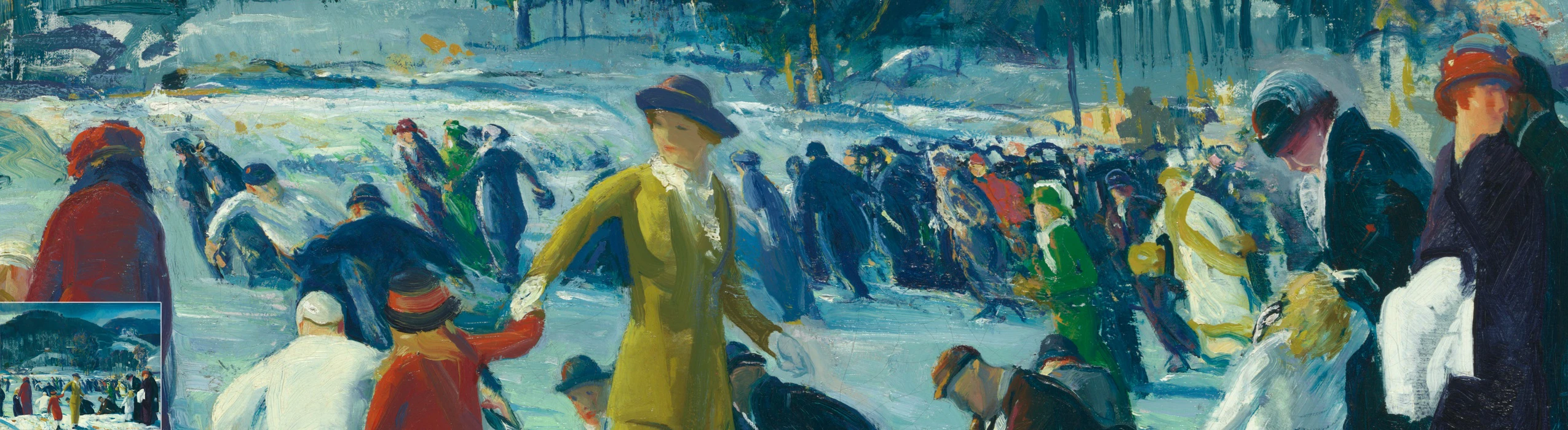
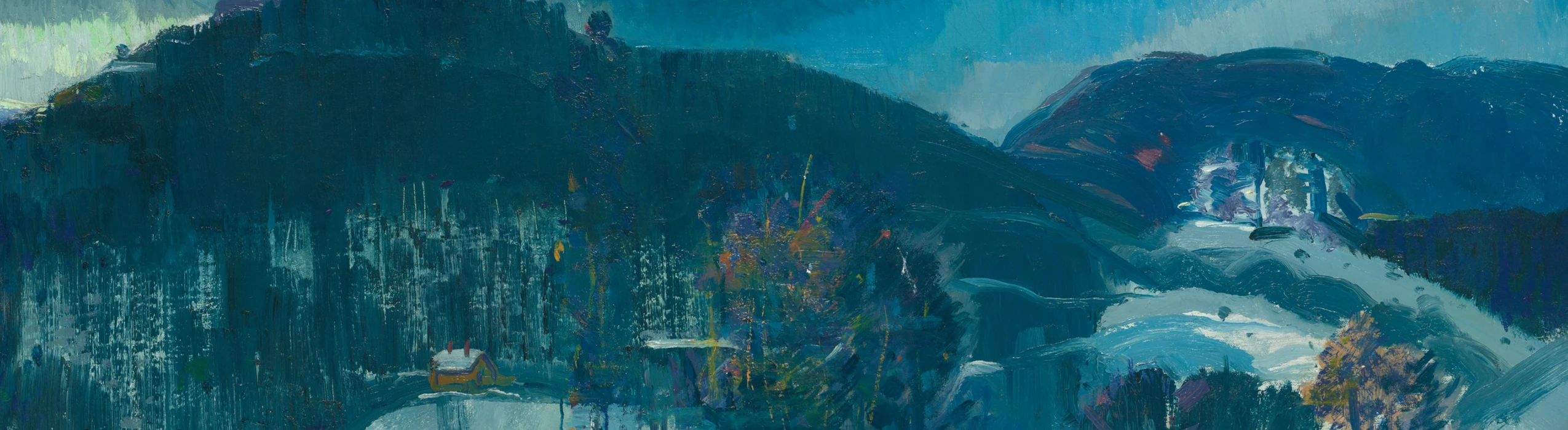
Another part of the same painting shows the background landscape behind the figures. Here we see different types of brush techniques, some more wavy and flowing, others more dry and textural. All this variety and playfulness follows from the artist’s desire to surprise himself and express in a fresh way how he felt those hills and trees.
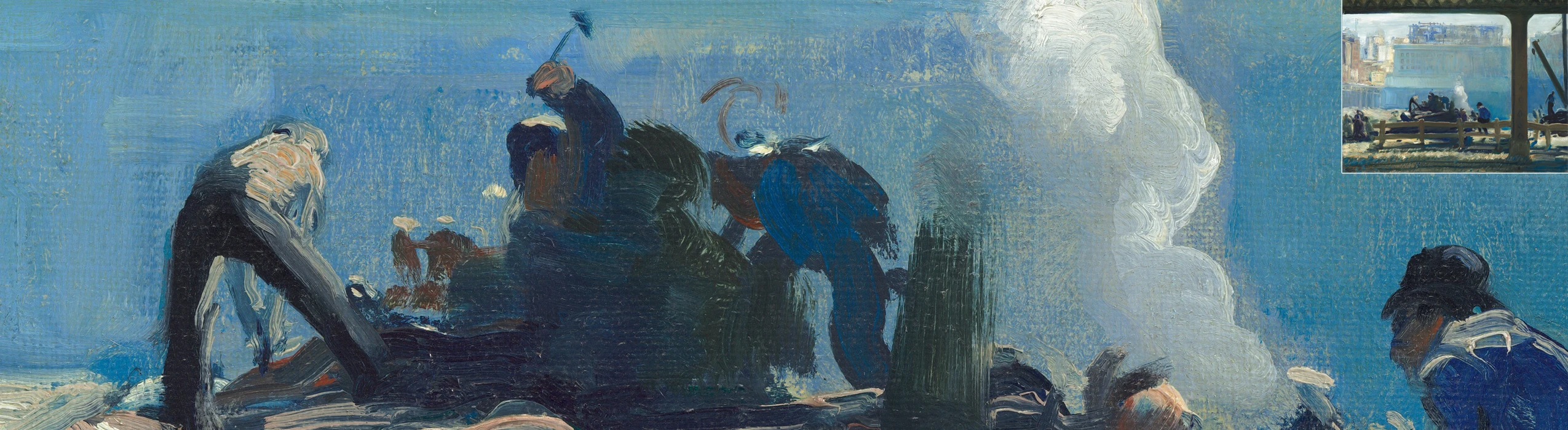
Let’s look at another Bellows painting, where workers are shown in action during a construction site, all bathed in a gentle luminous sunlight rendering marvelous colour tones. With a collection of smart brush strokes suddenly figures appear, but nothing precise is given, forms are fluid and merging with each other, nothing stands firm and independent from the whole dance. We see the bodies but they are as if disguised in the shape of the brush.
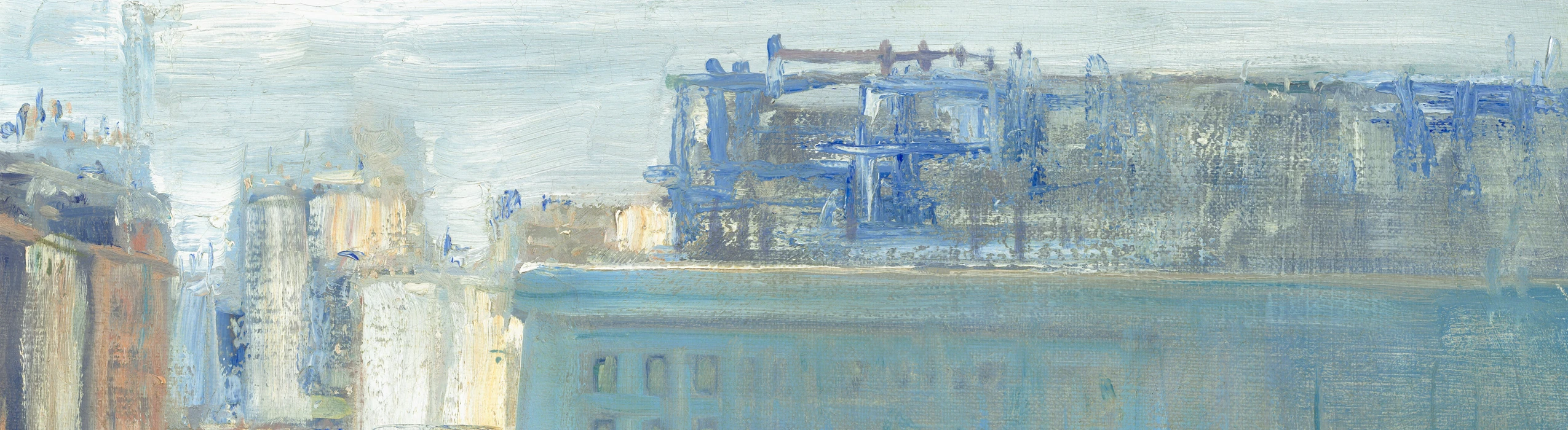
Another interesting area in this painting is the background scene of the buildings. Here Bellows jumps right ahead in time and meets his friends from the Bay Area movement. Again, he doesn’t want to spoil the subtlety of his vision by painting exact representations of these buildings. They are in the background and poured with light, they are glimpses of his memories, coming in and out of focus. Lines and smears barely try to represent construction and surfaces, but quickly disappear into a game of textures.
Edward Hopper, him being in the approximately similar time period, slowly tried to find his own voice and eventually developed his famous calculated compositions with alienated characters. But before his brush followed that planned calculation of his ideas, Hopper was much more loose during his starting years. In the painting below we can recognize a rocky coastline, but just as Bellows he allows the forms to appear in a more spontaneous way and never allow them to be held in stiffness but rather move in the mind’s eye.
The rocks on the left side that are closer to the viewer don’t get much detail as well. The light and shady parts are constructed but our sense of form recognition is constantly switched between order and chaos. This is not an attempt to illustrate rocks as something objective. This is a daydream of rocks, we are looking through the imagination of the painter. His visual memory is being affected by all the emotions he experienced during his visit to that place.


From all these examples, there is an important point to be stressed again. As I mentioned earlier, what we see is works where the artist has thoroughly befriended the medium and materials that are used. Most probably all of them had many initial phases where they started humbly, imitated orher works and styles, grew with excitation or shrank with despair that nothing resembling of an original voice will come out of the whole thing. But they just loved the proccess of painting and got more and more into ti with time. Mistakes are not really mistakes, as if they should never happen and as if only certain actions must happen in order to arrive at the “correct” state of painting. No one nose what is the ‘correct’ step at a certain point, it is an ongoing process. So they were not afraid of “mistakes”, they just threw themselves at the mercy of trying things and reacting to them until something got their spark going further. This is not just mere caprice and randomness, it is all informed by everything the artist has seen, felt and tried, taking what is interesting for him and digested it. In other words, discipline and spontaneity emerge together, and at some moment the one has to take over the other, but always, both are codependent of each other. To express poetic brushstrokes, one must control his spontaneity with discipline and at the same time let go of his discipline with spontaneity.