
The art of brushwork

Impressionism emerged in France at the same time that a number of other painters, including the Italian artists known as the Macchiaioli, and Winslow Homer in the United States, were also exploring plein-air painting. The Impressionists, however, developed new techniques specific to the style. Encompassing what its adherents argued was a different way of seeing, it is an art of immediacy and movement, of candid poses and compositions, of the play of light expressed in a bright and varied use of colour.[2] In 1876, the poet and critic Stéphane Mallarmé said of the new style: “The represented subject, being composed of a harmony of reflected and ever-changing lights, cannot be supposed always to look the same but palpitates with movement, light, and life”.[4]
The public, at first hostile, gradually came to believe that the Impressionists had captured a fresh and original vision, even if the art critics and art establishment disapproved of the new style. By recreating the sensation in the eye that views the subject, rather than delineating the details of the subject, and by creating a welter of techniques and forms, Impressionism is a precursor of various painting styles, including Post-Impressionism, Fauvism, and Cubism.[5]
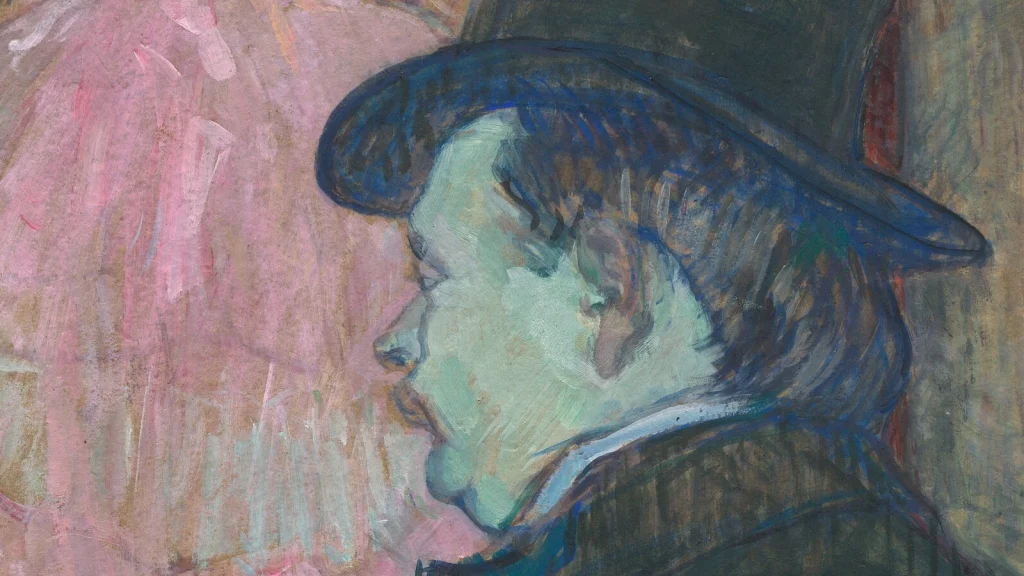
In the middle of the 19th century—a time of rapid industrialization and unsettling social change in France, as Emperor Napoleon III rebuilt Paris and waged war—the Académie des Beaux-Arts dominated French art.[6] The Académie was the preserver of traditional French painting standards of content and style. Historical subjects, religious themes, and portraits were valued; landscape and still life were not. The Académie preferred carefully finished images that looked realistic when examined closely. Paintings in this style were made up of precise brush strokes carefully blended to hide the artist’s hand in the work.[7] Colour was restrained and often toned down further by the application of a thick golden varnish.
The Académie had an annual, juried art show, the Salon de Paris, and artists whose work was displayed in the show won prizes, garnered commissions, and enhanced their prestige. The standards of the juries represented the values of the Académie, represented by the works of such artists as Jean-Léon Gérôme and Alexandre Cabanel. Using an eclectic mix of techniques and formulas established in Western painting since the Renaissance, such as linear perspective and figure types derived from Classical Greek art, these artists produced escapist visions of a reassuringly ordered world.[9] By the 1850s, some artists, notably the Realist painter Gustave Courbet, had gained public attention and critical censure by depicting contemporary realities without the idealization demanded by the Académie.
